

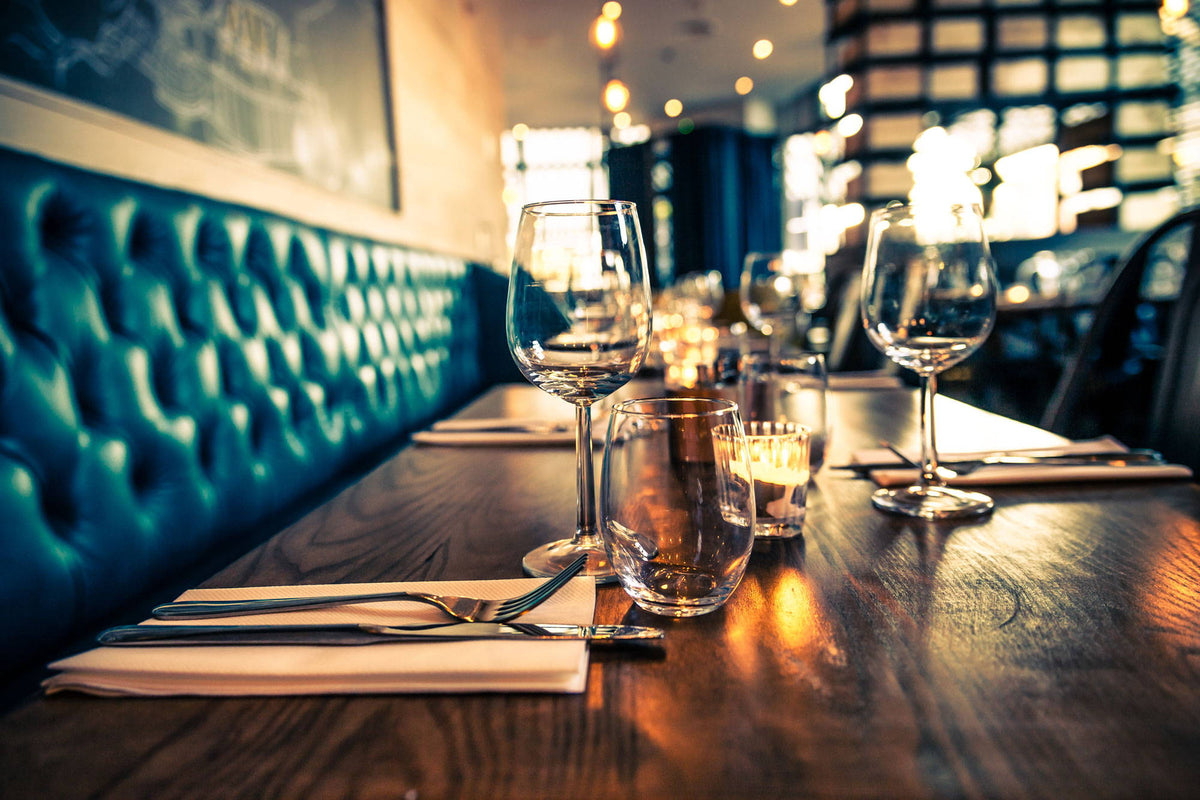

A thought that, for current reasons, is probably troubling many of us is how we can protect ourselves from the novel coronavirus. Is visiting a restaurant particularly dangerous right now? How hygienic and germ-free is it to eat and drink there at the moment? What are the Hygiene regulations for restaurateurs with regard to coronavirus?
Coronavirus has not so far been transmitted through food or consumer goods
You can breathe a sigh of relief and don’t have to cancel your reservations and planned restaurant, bar, or café visits. According to the The German Hotel and Restaurant Association DEHOGA Federal Association there has been so far no scientific evidence that the virus can be transmitted via products, consumer goods, or food. This is also confirmed by the Federal Ministry of Food and Agriculture and the Consumer Advice Center, because so far there are No cases of illness caused by consuming imported or regional foods.
Germs and bacteria are killed in the dishwasher

The coronavirus is among the viruses, the one that is not particularly heat-resistant are. Its "shell" is destroyed by high temperatures. From 56 degrees Celsius, most pathogens die off. - and the same applies to coronavirus. Because although it strikes greater fear into many people than conventional flu viruses, it is nevertheless no more heat-resistant than other germs of this kind. Modern dishwashers, such as those found in private households and commercial kitchens, wash at temperatures starting from 60 degrees Celsius, with the final rinse taking place at 85 degrees. With dishwasher cleaning, this ensures that the virus cannot survive! If you work in the hospitality industry and want to be on the safe side, you can also place our drinking straws in hotter water, as they can withstand temperatures of up to 200 degrees Celsius. Since water at 56 degrees is usually not used when washing by hand, we would also recommend, after cleaning, our drinking straws with pour boiling hot water over and ideal cleanliness is guaranteed!
Update
How should a restaurateur proceed in the best way?
Not only in view of the current situation, but also in day-to-day business, restaurateurs should always ensure germ-free conditions and cleanliness in their establishment. The DEHOGA Federal Association informs business owners and restaurateurs how they can and must best protect themselves against the spread of germs. As a basic principle, thorough instruction for everyone involved is important so that everyone pulls together!

Step-by-step reopening of food service businesses
All federal states may have their own Rreopen restaurants, however, when and how is at the discretion of the eindividual federal states. Individual counties may continue to establish different regulations.
What applies to all federal states?
Between 09.05 and 25.05, hospitality businesses are permitted under the following Vequirements reopen:
- Restriction of ÖOpening hours (Open until 9–10 p.m.)
- Limitation of Gbranches count/Control of access
- Distance- and Hygiene rules must be complied with
- Most Maskenpflicht for employees
- Reservations are strongly recommended/avoid queues
Tips for Restaurateurs
- Friendly Einstruction all parties involved (guests & staff)
- Notices with notices on the doors
- Pay attention to HHand washing & sanitizing`
- Always Ddisinfectant provide
- Tables from the room nehmen
- Remove chairs from the bar so that kan excessive movement in the dining room is created
- Not necessary Gitems from the table eRemove to have to clean less
- Floor markings can help guests and employees maintain distance
- Cashless Introduce payment
} the transmission of the virus through droplet infection over the air. Keeping a distance of 1.5 m from other people can therefore offer protection, as with other flu-like illnesses. Close contact with other people therefore poses a higher risk than touching hands or surfaces, although this should still not be entirely overlooked. It also can't hurt to regularly clean door handles and other frequently touched surfaces. Alle previous coronavirus infections, however, occurred through the air as droplet infections, according to the Robert Koch Institute. Whether with or without HALM, caution and consideration are required to prevent the spread of the virus and avoid infecting others.
In summary: Using our straws does not increase the risk of infection!
Take good care of yourselves anyway!
Your team at HALM
SOURCES
https://www.bmel.de/SharedDocs/Pressemitteilungen/2020/042-uebertragung-coronavirus-importierte-lebensmittel-unwahrscheinlich.html
https://gastgewerbe-magazin.de/wann-ist-geschirr-hygienisch-wirklich-sauber-1266
https://www.rki.de/SharedDocs/FAQ/NCOV2019/FAQ_Liste.html
https://www.orderbird.com/blog/hygienevorschriften-gastronomie-coronavirus/
Share:
Sustainable gift ideas for Christmas
Cleanliness of drinking straws in the gastro