

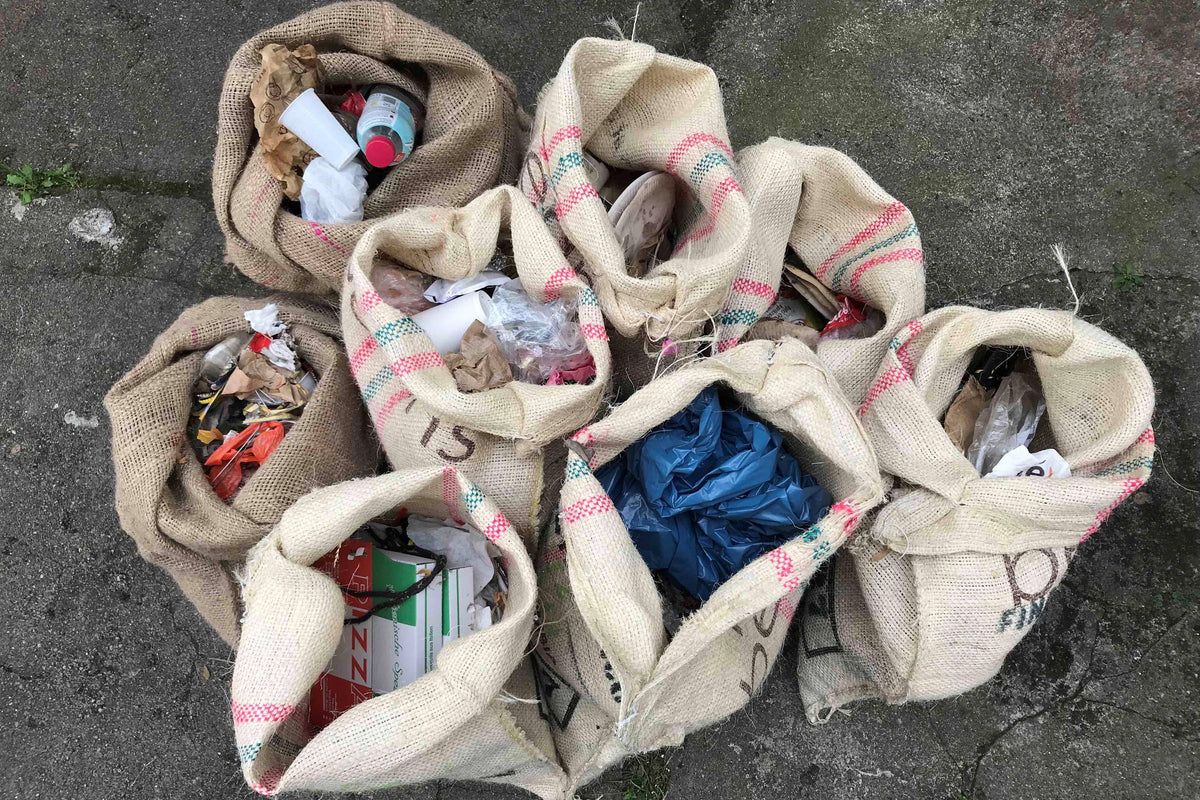
Recycling: a step toward protecting the environment
Today is Recycling day! Let's do the right thing on Global Recycling Day and save the planet!
What is Global Recycling Day?
We hear little about it, yet it is one of the most important things on our planet: recycling.
That is what Global Recycling Day is for! Global Recycling Day is an opportunity to raise awareness of the importance of recycling and of using products made from recycled materials, to help promote the development of more sustainable economic cycles.
Recycling is one of the most effective methods of protecting our environment. It is important to make recycling a global issue in different ways.
With small steps, you can create big changes!
Recycling at home
The World Bank estimates that waste generation will increase from 2.01 billion tons in 2016 to 3.4 billion tons in 2050. Today, at least 33% of this waste worldwide is poorly managed through open dumps or burning.
Far too many people still do not recycle, or only do so poorly, because they are not informed enough. That creates problems and raises important questions for our world. So our actions matter, because we are the actors of a greener world.
For many people, recycling is limited to sorting waste into colored bins, without really paying attention to what the products are made of. Sorting and recycling are also very expensive and time-consuming for many. But in reality, simple, quick actions are enough to take part in waste recycling.
Recycling is everyone's business! Everyone can get involved and become an actor in protecting the environment!


5 simple tips to protect the world from home!
#1 Get informed and ask questions
How should waste be sorted? Which bin does the shower gel bottle go in? There are many sorting guides or websites, such as BSR or Grüner Punkt, which provide lots of tips and information. Because unfortunately, a wrongly sorted bin is a bin that will not be accepted at the sorting center.
Not all materials can be recycled. For example, not all glass products can be recycled. Borosilicate glass, which is widely used because of its high heat resistance, is one of the glass materials that cannot be recycled. However, many people make the mistake of throwing it into glass containers.
#2 Give packaging and food a second life
For example use glass jars as storage containers, like a pencil jar, candle jar, vase for flowers & plants, or as decoration. This is a great chance to show creativity, because there are many different ways to recycle all kinds of objects this way!
Plastic bags should also be reused! When they are eventually completely worn out, it's better to get reusable bags, like our jute bags, and use them for every occasion.
#3 Choose recyclable materials
Not all objects can be recycled indefinitely. Plastic (and still, not every plastic product) can only be recycled a few times, as can paper. Pure glass, on the other hand (not borosilicate, because it is not pure), can be recycled endlessly. That is why glass should be preferred over plastic.
Paper is not the perfect alternative to plastic either, because its production requires a lot of water, wood and electricity, which represents a long-term problem for preserving our increasingly scarce resources.
Compared with glass, the problem with paper is not the energy used in production, but its reusability, which is much higher with glass. That is why it is important to look at which products can be used again and again, and then choose glass when you want something to last a long time.
#4 Think about composting
The amount of food thrown away every day is incredible. Don't throw away peels, leftovers or even eggshells! These make excellent natural fertilizer in the garden for planting flowers or fruit/vegetables. The same applies to coffee grounds or tea bags.
#5 Refillable products
Household products where the bottle can be refilled after emptying are a step in the right direction. This already produces much less waste and makes the recycling process easier.
What solution has HALM found?
Most glass straws on the market are made from the borosilicate glass mentioned above, which is not recyclable when it breaks. But to solve this problem, HALM developed a Glass straw that is 100% recyclable.
In the rare event that HALM straws should break - no problem! They can be disposed of in the waste glass container, where they can be recycled - they are thus given a new life. That is the concept of the circular economy. It is about giving already used products a new life.
Disposal becomes easier and less frequent when, instead of single-use products such as plastic straws, you use reusable products made from e.g. glass, like our straws.

Conclusion
The short lifespan that many products and materials have is a major problem for our planet. In the long run, there are not enough resources, to keep producing new things and throwing them away over and over again. However, if more people decide to give everyday products a longer life or use products that are more reusable, that is an important step for our planet!
#GLOBALRECYCLINGDAY
Together we can save the planet, because together we are stronger!
Share:
Cleanliness of drinking straws in the gastro
Separation of waste in gastronomy