

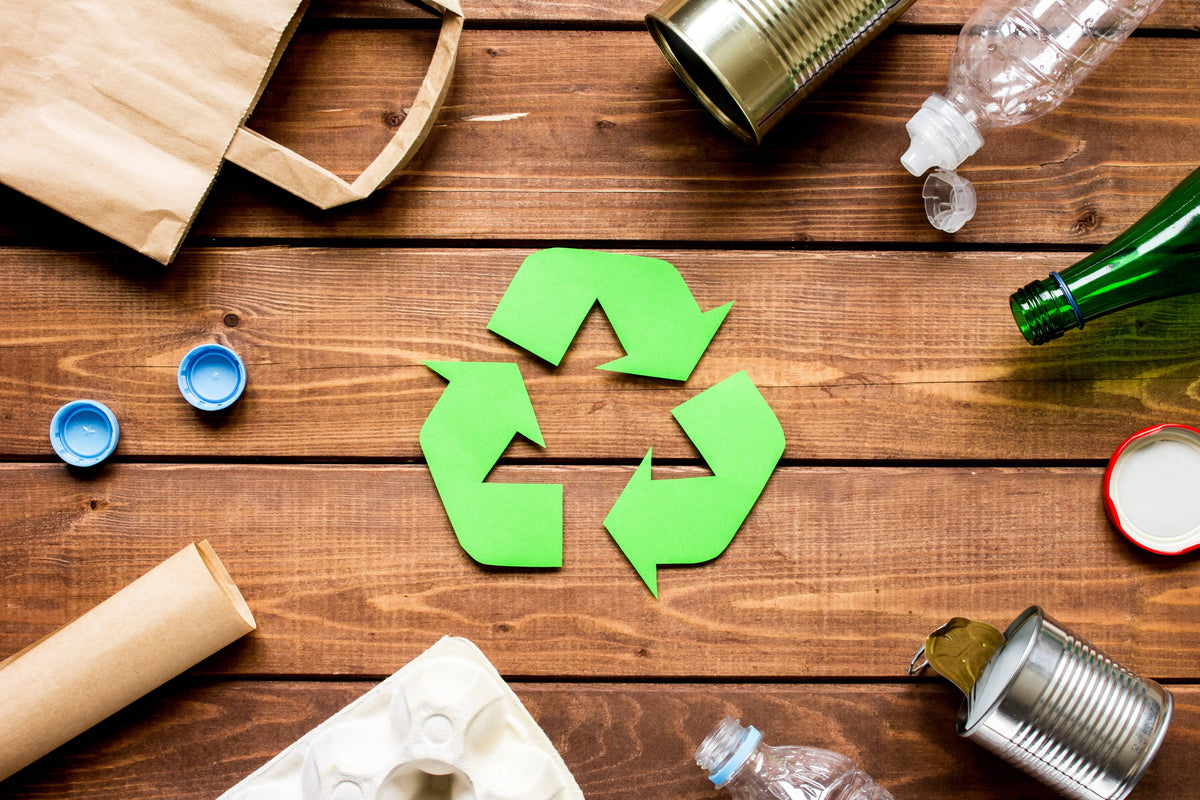

In Hospitality, waste is generated in abundance - starting with the Bowl for takeout food, takeout Cup and Lid, Film, which food is wrapped in, the Plastic cutlery, up to the Disposable bag for a snack on the go. During the preparation of each dish, Trash, there is usually a Staw and if the food is not finished and you still want to take it with you, then the Styrofoam tray to use. At the breakfast buffet there are small packed jams and at the coffee table Disposable coffee creamer. Despite all this, guests do not want to forgo a cozy restaurant visit, but their requirements and The demand for more sustainable alternatives is growing! More and more people want to know what waste is created, when and how it is created, and above all, what happens to it. How can you do justice to this as a restaurateur?

Sustainability is becoming more important to many people!


Correct waste separation saves money and protects the environment
The less waste, the better. Of course, this cannot be implemented overnight, so initially it would be an important step to continue the previous look at and optimize waste disposal processes. A major problem in many businesses is waste separation to begin with. Things often have to happen quickly, food scraps end up in the yellow bag and the empty cream packaging in the organic waste bin. Or there is simply no room for many different bins in small kitchens or behind narrow counters. Proper waste recycling then unfortunately can no longer take place, even though all kinds of different types of waste are generated in every food service business! Food service businesses could make a major contribution to the environment by their Inform staff and everyone involved well about waste separation and set realistic goals for the team.
| Frequent waste in the catering industry... | These bins should be ready... |
|---|---|
Glass bottles, i.e. containers |
Waste Glass Container |
Plastic such as plastic packaging, aluminum, tin cans & composite materials (a material consisting of two or more materials such as, for example, Tetra Paks) |
Recycling bin |
Organic waste & food scraps |
Organic waste bin |
Cardboard & Paper |
Old paper container |
Other residual waste such as ceramics, ash, vacuum cleaner bags, etc. |
Residual waste bin |
Here it is important to note that Carefully sorted waste glass by color - brown, green, and white, and should be cleaned if necessary. This includes neither ceramic nor glass from broken drinking glasses. Papers can be shredded - that saves a lot of space! Disposing of used oils and fats instead of pouring them down the drain also has a financial benefit - many waste disposal companies pay money. In general, larger residual waste bins cost businesses more money, since Recycling bins have been mandatory for restaurateurs since 2015 are - so if waste is sorted more carefully, this can reduce the costs for residual waste, the so-called waste disposal fees. There should also be an option Textiles, wood, and metal should be disposed of separately.
Why is waste separation actually so important?
Without waste separation, this cannot be recycled, as each material must be processed differently. Recycling means that material is processed and reused, which saves resources.
Recycling plays an enormous role for our planet, but unfortunately only a fraction of the waste produced is recycled. By recycling materials, resources and energy can be saved, the The greenhouse effect is reduced and thus the Counteracted global warming are. The list of positive effects of proper waste separation and, ultimately, increased recycling is long! In Germany, there were 222,740 businesses in the hospitality industry in 2019. These can therefore an enormous impact on the environmental footprint of the country and thus a significant contribution to reducing environmental impact accomplish!

“There is no doubt about the findings of the scientific community: The danger of global warming is very real, and immediate action is essential. It is a serious mistake to believe that we can afford to delay any longer. Scientists do not believe that, and neither should anyone else.”
— Henry Kendall, Nobel Prize winner in Physics
Benefits for Restaurateurs
What advantages do I have as a restaurateur if I avoid waste and pay more attention to proper disposal?
First of all, it improves the Image: Sustainability is not just a trend, but has become an important and unavoidable responsibility for many! Guests will have a good impression and, with a clear conscience, will therefore visit an establishment more often if they know that environmental protection matters here.
You can save hard cashwhen trying to reduce your waste or sort it properly! As the following sample calculation shows:
"The following calculation example shows the savings. In a
Hotels generate around 3.5 liters of residual waste per overnight stay.
In addition, if not carefully separated, a
liters of recyclables and other waste in the residual waste bin.
This results in a weekly waste volume of
900 liters. The hotel requires a residual waste bin with 1,100
liters volume, because the next smaller bin (770 liters)
is not sufficient. With weekly emptying, such a
Residual waste bin depending on the region around 1,700 euros per year. In
`
— DEHOGA Federal Association
How can packaging waste be reduced?
... to generally have less that needs to be separated.
- Buy in bulk instead of several small packs
- Packaged products, e.g. at the breakfast buffet or coffee table, should be replaced with bowls/dispensers (this can also reduce food waste, as guests can portion it themselves)
- Replace plastic straws with glass straws
- Use reusable boxes and bags for shopping and/or return packaging to suppliers who can or must dispose of it
- Use coasters made of wood or glass
- Use reusable cloth napkins instead of paper ones
But it is not only packaging that poses a problem
... the amount of food waste produced by a catering business is also enormous.
DThe composition of the waste should be examined and analyzed to determine what is most prevalent. If the waste, for example, mainly contains cooked food that is not consumed by customers, the Revised menu and the portion size of the dishes should be reduced or two different dish sizes should be offered (small or large).
If the portions still cannot be finished, guests should have the option to take them with them. Unfortunately, most to-go containers are not reusable and therefore are not in keeping with sustainability. Customers can therefore, for example, be advised to bring your own container, a Set up a deposit system for to-go boxes like e.g. reBowl or at least choose more sustainable material for the boxes, such as sugar cane.
Too many cooked dishes don't have to be thrown away at the end of the day! To Reduce food waste there are now several companies on the market that help avoid waste, e.g. toogoodtogo. Before the end of the day, unsold food can also be sold at a lower price. The advantage is threefold:
- Customers are happy to buy these at low prices
- You earn real money, because instead of throwing these foods away, they are resold
- And above all, this is a big step for the environment!
For the enjoyment of customers and the avoidance of waste, the Quality should come before quantity in every business.!

Conclusion
Many people are placing increasing value on sustainability and environmental protection, and they expect the same from companies. On the other hand, companies and businesses can also set a good example and use the major role they play in society for something positive! The topics of waste separation and recycling should always be discussed with the team so that together you can make a difference.
Waste separation is a good step in the right direction, BUT: the less waste, the cheaper and less stressful! Reusable alternatives also look better, don't have to be constantly repurchased, and are therefore more cost-effective in the long run.
The environment and your customers will thank you!
Sources
https://pos-sector.de/management/abfallentsorgung-in-der-gastronomie
https://www.gruener-punkt.de/de/muelltrennung-muell-trennen.html
http://blog.bookatiger.com/muelltrennung-wie-und-warum/
https://g-wie-gastro.de/unternehmensfuehrung/umweltschutz/muell-trennen---so-geht-es-richtig.html
https://www.umweltbundesamt.de/sites/default/files/medien/publikation/long/3893.pdf
https://www.gastro-academy.com/gruenden/haccp-hygiene/abfallentsorgung/
Share:
The Global Recycling Day
Help for restaurateurs during the Corona crisis